

Alabama’s thriving startup scene is proving what’s possible when public and private partners unite to support founders.
BY INC. CUSTOM STUDIOJan 6, 2026SHARELinkedInFacebookXBlueskyLinkADD ON GOOGLE
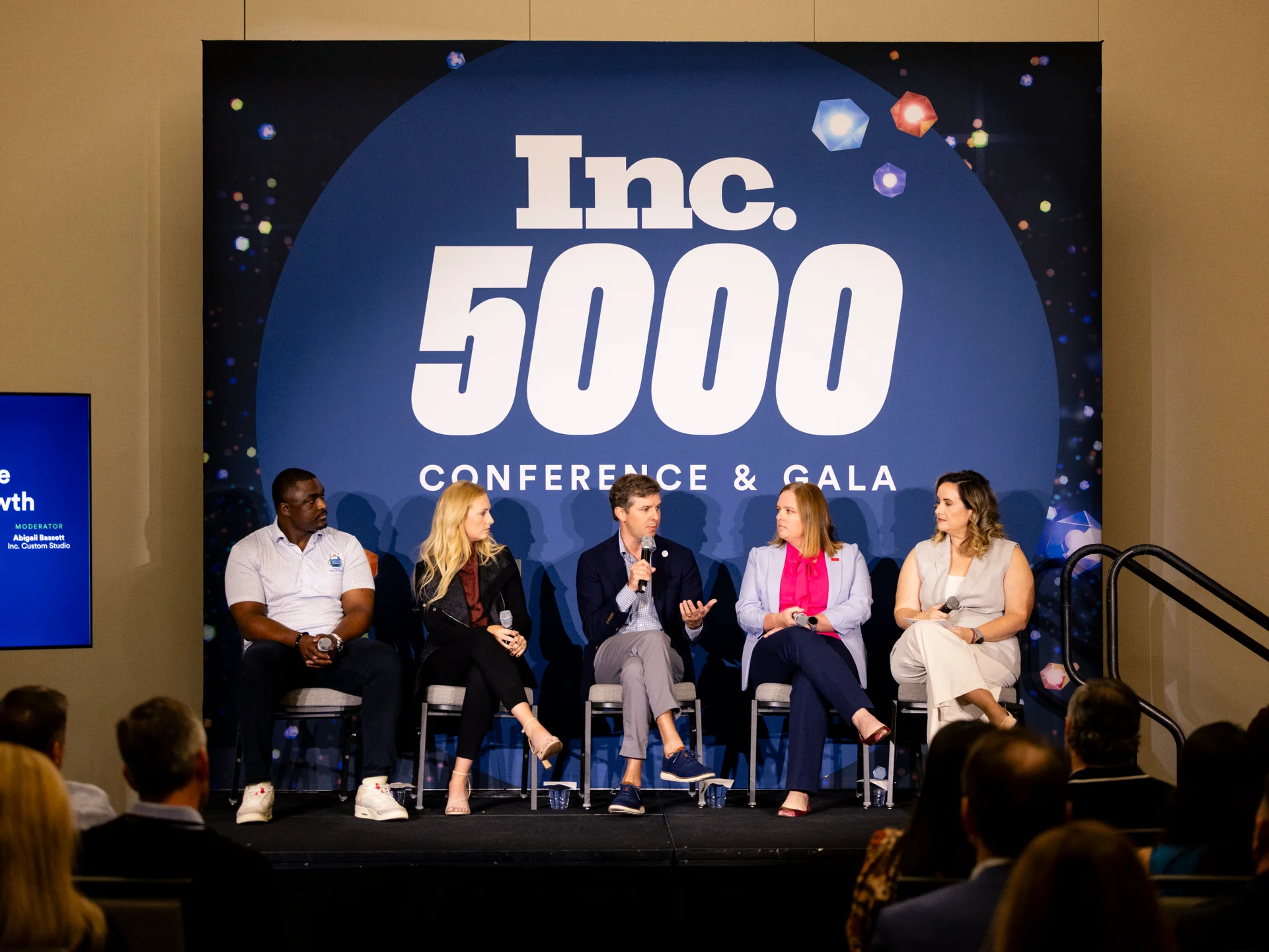
Four business leaders from Alabama’s startup ecosystem discuss the state’s strong focus on founders at the 2025 Inc. 5000 Conference & Gala in Phoenix.
Most stories of startup success focus on tech hotspots like Silicon Valley or New York City. However, at this year’s Inc. 5000 conference, one standout conversation centered on Alabama, a state that’s been quietly rising in the ranks as an attractive home base for founders.
During the panel titled “Scaling Up: Alabama’s Collaborative Approach to Start-Up Growth,” and led by Inc. Custom Studio correspondent Abigail Bassett, four leaders discussed how coordinated state programs and cross-sector collaboration are turning Alabama into an innovation hub.
The featured panelists included Audrey Hodges, director of communications and talent at the Economic Development Partnership of Alabama (EDPA); Charlie Pond, executive director of Alabama SSBCI at Innovate Alabama; Angela Smith, senior project manager of technology at the Alabama Department of Commerce; and Olumuyiwa Aladebumoye, co-founder and COO of SmartWiz, a tax software company.
The conversation came at a time when U.S. startup investment is showing signs of an upswing. According to a PitchBook report, venture funding climbed more than 75.6 percent in the first half of 2025, largely driven by the AI boom, underscoring the opportunity for regional ecosystems to capture that momentum.
Amid this wave of growth, insights from the Alabama business leaders revealed a blueprint for other states looking to help founders succeed.
1. Build an ecosystem that puts founders at the center
Rather than forcing startups to navigate a maze of disconnected programs, Alabama designed its ecosystem around founders’ needs first, then aligned public and private partners behind that goal.
EDPA has led the effort with programs like Alabama Launchpad, which has invested more than $6 million in early-stage companies now valued at $1 billion.
“We want to offer our founders white-glove service when it comes to connecting you with the resources that are right for you and your team at that time,” said Hodges.
That “white glove” approach extends to talent. Through EDPA’s talent attraction and retention program, Fuel Alabama, and the HBCU Innovation Internship Program, students get exposure to entrepreneurial careers within the state.
“These bright, technical, talented students from HBCUs all over Alabama are getting their hands-on experience in these startups,” Hodges explained. “[They’re] seeing, ‘Okay, I could have an entrepreneurial path right here in Alabama.’” The result: a tighter feedback loop between universities, talent pipelines, and growing companies.
2. Collaborate to close the capital gap
Alabama organizations have taken an active role in building self-sustaining capital infrastructure. Innovate Alabama, which launched with $98 million in federal SSBCI funding, runs programs like LendAL and InvestAL to ensure startups can access funding when needed.
According to Pond, the company works with venture funds with genuine investment in Alabama startups. “We built that into our agreement with Halogen [Ventures] and other funds—that the money has to go to Alabama companies,” Pond said. But it’s not just about writing checks; Innovate Alabama works with VCs who provide mentorship within the organization’s programs.
The vision is long-term, Pond added: “This isn’t a one-time $98 million into the ecosystem and then we’re done. We want this to be around for a long time.”
3. Highlight the advantage of staying local to retain founders
A challenge for regional startup ecosystems is founder retention. But Alabama is flipping the script by making the state’s collaborative environment its biggest selling point.
Take SmartWiz, for example: When the Birmingham-based tax software company was offered a $3 million investment contingent on relocating its headquarters to Los Angeles, the founders declined.
“We respectfully turned down that $3 million [and] came back to Alabama,” Aladebumoye said. “That’s where we ran into the SSBCI grant.” The grant helped the company close its seed round.
The combination of funding, mentorship, and workforce support proved Alabama could rival larger markets. “We wouldn’t be where we are today without the programs that everybody mentioned on the stage,” Aladebumoye said.
4. Pair capital with workforce development
To help startups scale, Alabama’s Department of Commerce offers customized recruitment and training through its Alabama Industrial Development Training (AIDT) program.
Smith explained that AIDT helps founders identify the skillsets their employees will need as they start hiring. It also helps manage the process of recruiting, hiring, and training talent to ensure business owners “get the workforce” they need, she said. This shows how funding and workforce programs that are designed in tandem can support growth.
5. Lead with community, not competition
While each panelist highlighted different advantages of Alabama’s maturing startup network, they all came back to one central element driving the state forward: A strong sense of community.
“One thing that I wish everybody knew about the state of Alabama is that it’s family first,” said Aladebumoye. Hodges echoed that sentiment, noting that founders who succeed tend to give back, creating a cycle of mentorship and reinvestment.
Pond put it more pragmatically, saying, “You can be a big fish in a small pond in Alabama still.”
Summing it up, Smith said, “Once you get plugged in with one of us, you’re plugged in with all. The barrier to entry to succeed in Alabama is just your willingness to hustle.”